2 hours per day became 10 minutes.
Order fulfillment automation that actually works. No learning curve. No cloud dependencies. Just better workflows.
0%
Time reduction
10min
Daily routine
10x
Order capacity
Order System - Micro SaaS | Built for real manufacturing workflows
The bottleneck was invisible.
My wife manages order fulfillment for a family-owned furniture business—wooden shelves and brackets sold across three marketplaces: Amazon, Mercado Livre, and Shopee.
Every single day, the workflow was: download CSV from three marketplaces → manually look up materials → create separate lists for three departments → handle bundle orders → review for mistakes → send to teams.
2 hours per day. One order at a time. Manual lookups. High error risk.
The business had a clean product database (SKUs, materials, specifications) and clear department workflows. What they didn't have was a system connecting product data to departments. She was the bridge. Manually. Every night.
What it looked like before
Handwritten lists. Spreadsheets. Memory. This was the system—if you could call it that. No connection between product database and fulfillment. No automation. No validation.
Every order required manual lookup, handwriting, and verification across spreadsheets
The Impact
0%
Time reduction
0min
Daily routine now
0x
More orders/day
0h
Monthly hours saved
0%
Error rate
The Solution
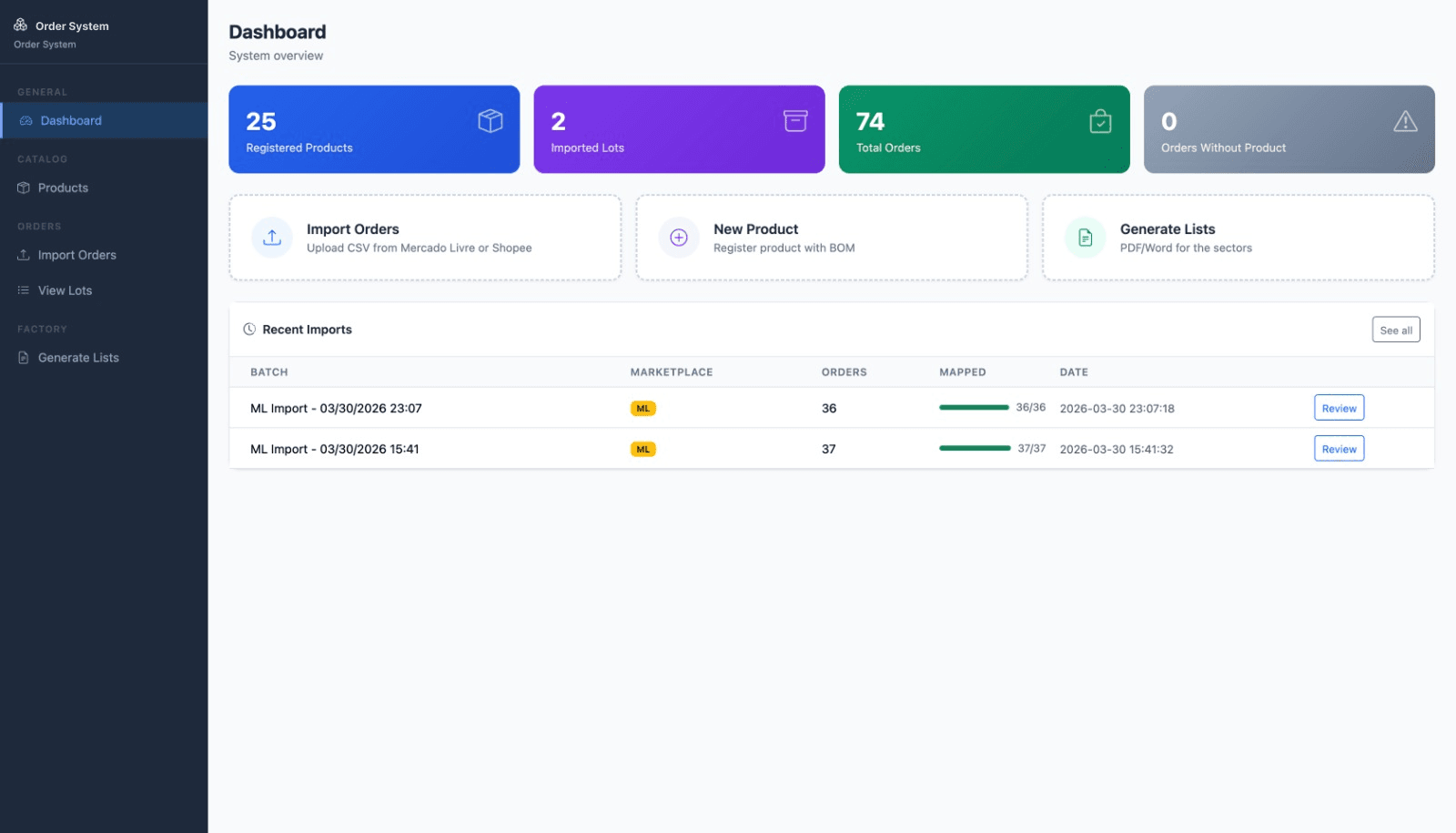
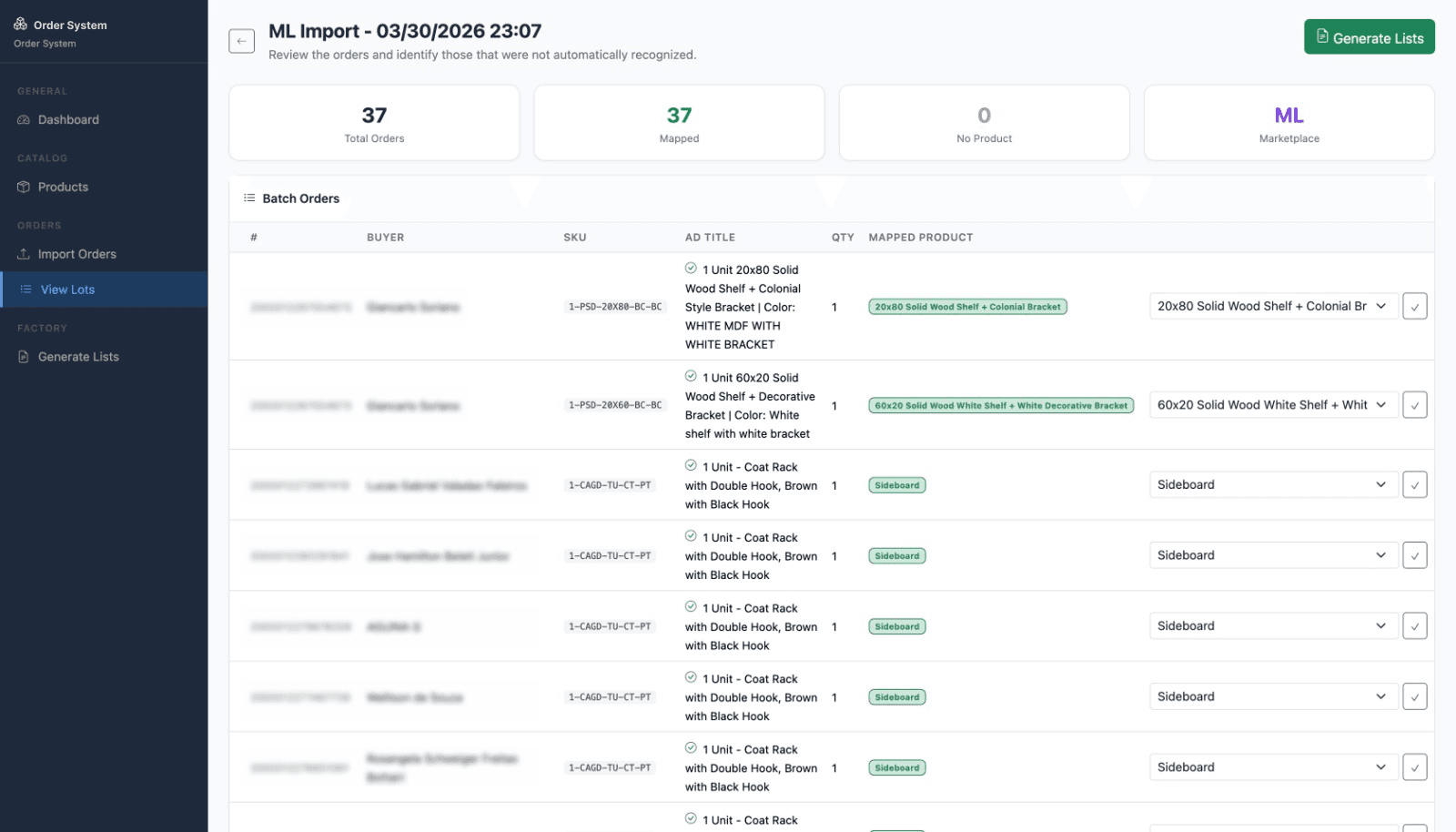
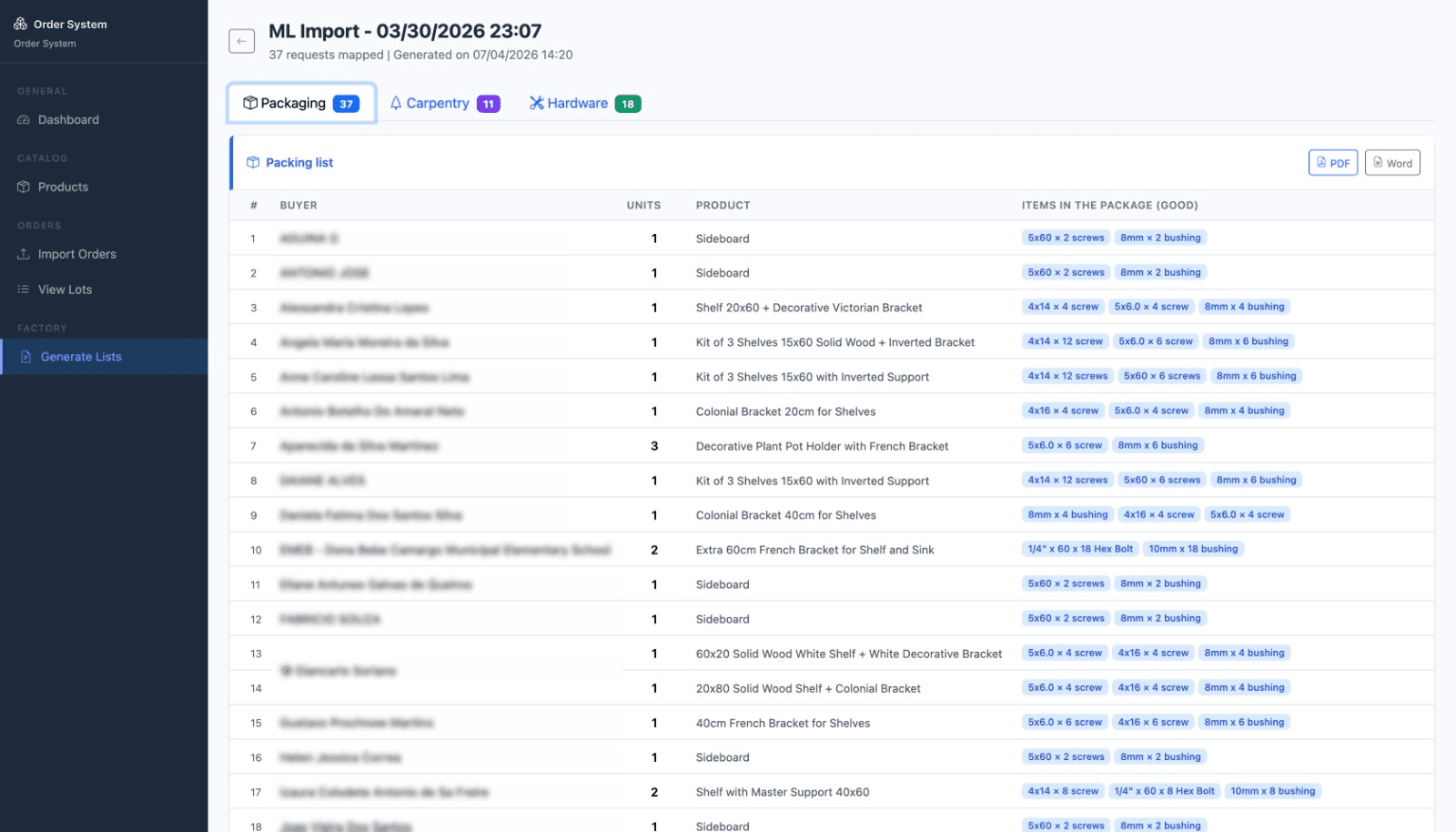
Understanding the Real Problem
I watched her process for a week. The issue wasn't laziness—it was process mismatch.
She never invented anything. She looked up, calculated, organized. The "system" was fragments: spreadsheet templates, memory, sticky notes.
Design principle: Zero learning curve. If it takes explaining, it fails.
Local-First, Offline Design
Factory has spotty internet. Cloud sync would have been wrong architecture, but local database was correct product design.
The system handles complexity inside—export is simple. She reviews 5-10 minutes, approves, teams get clear lists.
- ✓ Export marketplace CSV (no re-entry)
- ✓ Automatic product mapping
- ✓ Three department-specific lists
- ✓ Bundle orders handled automatically
Validation Over Prevention
System could force her to fix every discrepancy. Instead, it shows problems and lets her decide.
She catches edge cases I would never code for. Real data taught us more than assumptions.
First version was 60% right. After 500 real orders, we fixed the 40%.
What I Learned
Solve specific problems, not categories
I could have built a manufacturing ERP. Instead, I built "turn spreadsheet → material list." One job done well beats a platform doing 20 things okay.
User research beats your roadmap
I wanted to add features. She wanted fewer clicks. Guess which one mattered.
Simple is harder than complex
The hardest part was not code—it was saying no to features that seemed useful. The system does ONE thing: convert marketplace CSV → department lists.
Constraints clarify what actually matters
No internet connection meant local database. Low-tech team meant simple exports. Constraints > flexibility when building for real users.
The handoff is part of the design
I could optimize database queries forever. What moves the needle: her spending 10 minutes reviewing instead of 2 hours searching.
The best tools are invisible.
Good product design isn't about technology choices. It's about understanding a person's actual workflow and removing friction from it.